



At PSG, the partnership with 1xBet has been in place since mid-2022. In May, a month before the start of the Club World Cup, the club made a social media post across different countries to promote the partnership: https://x.com/PSGbrasil/status/1923360994903928839.
Chelsea, on the other hand, announced its sponsorship with Roobet in January of this year, stating that the partnership targets Latin America and Canada, allowing for brand visibility and reach in 32 key markets, while enhancing the user experience through promotional content and exclusive campaigns.
“The presence of betting companies in clubs like PSG and Chelsea shows how this market has become global and strategic for football. Along with this expansion, there is also a growing responsibility to promote a culture of responsible gaming. Entertainment must come with information, limits, and guidance,” says Daniel Fortune, a digital influencer specializing in Responsible Gaming.
Out of the 17 teams that participated in the Club World Cup and have partnerships with betting companies, 6 are from South America — the 4 Brazilian teams (Botafogo, Flamengo, Fluminense, and Palmeiras) and the 2 Argentine giants (Boca Juniors and River Plate) — all featuring bets as master sponsors.
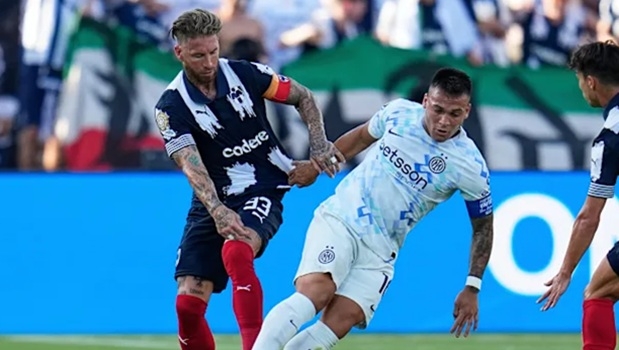
The remaining 11 teams are spread across various continents, with key examples like Internazionale (Italy) and Porto (Portugal), the only non-South American clubs to display betting logos on the main front of the jersey.
Additionally, clubs like Benfica (Portugal) and Pachuca (Mexico) feature betting logos on their kits, but not as master sponsors. Meanwhile, 7 teams have some form of partnership with betting companies but without shirt advertising: PSG (France), Real Madrid (Spain), Bayern Munich (Germany), Manchester City (England), Chelsea (England), Juventus (Italy), and Auckland City (New Zealand).
“This is a mature and regulated market in several countries, confirming a global investment reality in the main leagues; some more, some less, but it highlights the importance of this global industry in football,” says Filipe Molon, Commercial Director at Ana Gaming, present in four top-tier Brazilian clubs.
Although Europe doesn't follow the same rules as Brazil, betting sponsorships are significant. In Italy’s Serie A, 10 of the 20 teams have betting partnerships (Internazionale, Milan, Juventus, Lazio, Fiorentina, Torino, Udinese, Como, Monza, Lecce); only Inter features a master sponsorship, and 5 of these teams have no betting brand on their uniforms.
“With significantly large and loyal fan bases, sports sponsorships can work well for brands seeking recognition, notoriety, and retention. In a growing regulated market like Brazil's, tournaments like the FIFA Club World Cup can work wonders for brand growth among operators,” says Alex Rose, CEO of InPlaySoft, a UK-based company specialized in developing platforms and solutions for betting operators.
“Indeed, Brazilian Serie A teams already showcase our clients' logos. The approach to sponsorship varies worldwide, of course, and we support those that offer entertainment without compromising player protection,” he adds.
Considered Inter’s biggest rival, Milan established a unique link with the Brazilian sports betting sector. In April, Reals became Milan's Official Regional Betting Partner in Latin America — the first Brazilian company in the sector to sponsor a European giant, duly licensed by the Brazilian Federal Government.
“Partnering with a globally recognized club like Milan is a huge pleasure. Among Brazilian-founded betting companies authorized to operate in the country, we were the first to establish this kind of international agreement. This positions Reals as a solid and trustworthy company for bettors, strengthening its brand as a key sports sponsor,” states Rafael Borges, CEO of Reals.
Among the world's top leagues, Portugal is closest to Brazil’s model: of the 18 top-tier clubs, 12 (67%) are sponsored by betting companies, with 11 having them as master sponsors — including Sporting, Benfica, Porto, Braga, Famalicão, Vitória, Rio Ave, Arouca, Estoril Praia, Gil Vicente, Moreirense, Santa Clara, and Farense.
In the Premier League, often seen as the origin of betting sponsorships, 15 out of 20 teams have partnerships with betting brands (75%). Six clubs feature them as master sponsors (Aston Villa, West Ham, Brentford, Wolverhampton, Fulham, and Everton), while 8 others have partnerships without any uniform visibility (Manchester City, Arsenal, Chelsea, Liverpool, Tottenham, Manchester United, Newcastle, and Brighton).
In Germany's Bundesliga, 11 out of 18 teams (61%) have betting partnerships (Bayer Leverkusen, Borussia Dortmund, Eintracht Frankfurt, Freiburg, Werder Bremen, Union Berlin, Mainz 05, Augsburg, Heidenheim, 1899 Hoffenheim, and Holstein Kiel), but only Holstein Kiel displays the logo on their kit sleeve.
In Spain’s La Liga, 5 of 20 teams have betting partnerships, but none display logos on their kits — namely Real Madrid, Barcelona, Athletic Bilbao, Deportivo Alavés, and Celta de Vigo.
In France’s Ligue 1, 9 out of 18 teams (50%) are sponsored by betting companies (Paris Saint-Germain, Monaco, Lille, Nice, Lyon, Stade Reims, Le Havre, Saint-Étienne, and Angers); only Le Havre has a master sponsorship, and 6 others have no visible brand on their uniforms.
In England’s Championship (Second Division), known for heavy transfer spending, 12 of 24 teams have betting partnerships, standing out in this space.
“Betting sponsorships have become essential for financing and sustaining clubs. For Serie B teams in Brazil, which earn lower prizes compared to the top tier, betting companies help pay salaries, sign players, and enhance the club’s media presence,” says Renê Salviano, sports marketing expert and CEO of the Heatmap agency, which has brokered deals between clubs and betting firms.
“Additionally, clubs capture more fans, especially those active in betting, as companies often offer benefits to fans and club members,” he adds.
Regulatory differences across countries
In England, the world’s largest betting market, Premier League clubs will no longer display betting sponsors on the front of jerseys starting in the 2026/27 season. However, they will still be allowed to showcase these brands on sleeves, advertising boards, and interview backdrops.
“Betting companies have become prominent in sponsorship, covering sports and events, especially football. While the market is well-established in some countries, in Brazil we are still understanding its dynamics since the beginning of regulation in January this year,” explains Ricardo Bianco Rosada, founder of consultancy firm brmkt.co specializing in Strategy, Branding, Marketing, and Business Development.
“The solution isn’t banning betting ads, but educating and raising awareness among bettors. The sector has become a financial pillar for the sports industry — without this support, the financial situation of clubs and tournaments would be critical,” adds Rosada.
In Spain, the absence of betting logos on kits stems from new regulations: since 2020, displaying betting brands on shirts or naming stadiums after betting platforms has been prohibited.
“Regulation separates the wheat from the chaff, ensuring that only reputable and credible companies remain. It also creates opportunities to attract international operators, establishing Brazil as one of the most relevant global markets, particularly in sports betting. With enormous long-term growth potential, the country is positioning itself as a strategic destination for gaming and betting investments,” concludes Leonardo Henrique Roscoe Bessa, consultant to the Federal Bar Association of Brazil (OAB) and partner at Betlaw, a law firm specialized in gaming and betting.
Source: GMB