




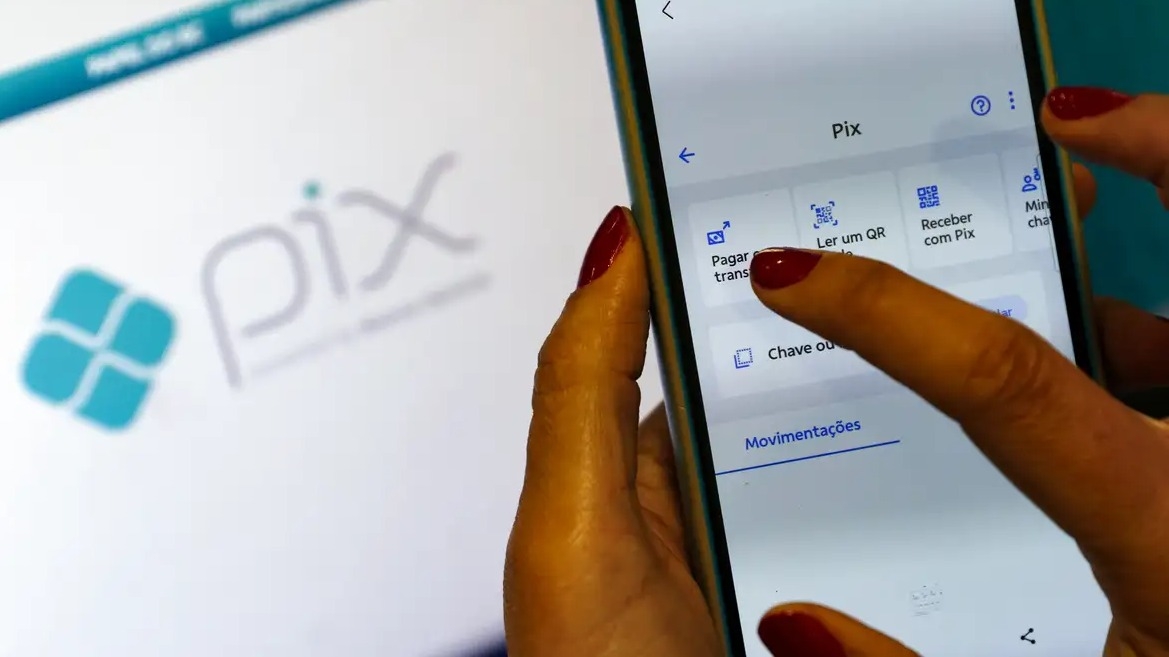
Last week, a piece of news stirred the behind-the-scenes of the betting and fintech industries: Pix has started to be offered in the United States. Still in its early stages, the system is already being considered as an alternative payment method for online betting—especially on platforms catering to Brazilian audiences.
Although implementation is currently happening through intermediaries—requiring currency conversion and indirect integration with Brazil’s Central Bank system—the move marks a significant step toward the internationalization of a model that has already transformed the Brazilian market.
A success story with Brazilian DNA
During BiS SiGMA Americas 2025, the panel “Payment Landscape in iGaming: Challenges and Opportunities in the Era of Pix and Regulation” had already hinted at this trend. For César Garcia, CEO at One Key Payment: "If you look in the rearview mirror, five years ago, Pix didn’t exist. Today, it’s the standard. We're seeing other countries try to replicate the Brazilian model, and that says a lot about what we’ve built here.”
And it’s no coincidence. Pix not only accelerated financial inclusion in Brazil but also became the main payment method for iGaming in the country. According to Leonardo Baptista, CEO at Pay4Fun:
"Today, more than 90% of iGaming transactions in Brazil are done through Pix. It’s fast, secure, and meets exactly what the user in this sector wants: speed.”
Global opportunity, local challenges
The news of Pix’s debut in the U.S. signals a potential shift: exporting national financial solutions to address payment bottlenecks in more mature, but often less efficient, markets.
However, enthusiasm must be tempered. As Bruno Gonçalves, Sales Director for Brazil and Mexico at OKTO, explained during the same panel: "Pix may be simple, but it’s still challenging from a compliance standpoint. When we start talking about international expansion, it’s crucial to understand how traceability, currency conversion, and taxation, especially the IOF tax,will work.”
Two sides of the coin: critical aspects of Pix
When discussing Pix’s international expansion, two core characteristics must be highlighted:
Strength: traceability as an ally of transparency
One of Pix’s greatest strengths is its ability to provide detailed records of every transaction. Each payment is documented with precise data such as amount, time, sender, recipient, and the institutions involved, enabling full traceability.
This makes Pix a powerful tool in the fight against money laundering, fraud, and tax evasion. In contrast to less traceable methods, like cash or informal transfers, Pix offers complete visibility into financial flows, enhancing regulatory oversight and increasing business security.
Weakness: dependence on Brazil’s Central Bank
On the other hand, Pix is entirely dependent on the infrastructure of the Central Bank. Since the system operates in real-time and is anchored in the Instant Payment System (SPI), any technical issue or downtime at the Central Bank affects all participating institutions simultaneously.
If the Central Bank stops, Pix stops too, causing disruptions across banks, fintechs, merchants, and end-users. This efficient centralization is also a potential point of systemic vulnerability.
And what about the IOF tax?
Although Pix is free for individuals within Brazil, its use in international payments—especially through intermediaries—requires currency conversion and is therefore subject to the IOF tax.
Following the government’s unification of IOF rates, implemented in 2025, the tax now stands at 3.5% for most international transactions, including remittances and foreign purchases. This rate also affects transactions related to online betting platforms that involve currency exchange, even indirectly.
Is Brazil ready to lead?
The internationalization of Pix raises an unavoidable question: is Brazil prepared to lead the future of global payments in the betting industry while still fine-tuning its own internal regulations?
Meanwhile, countries like the U.S., which currently lack a payment solution as efficient as Pix, are beginning to test the Brazilian innovation as a real alternative to unlock cash flow in high-volume sectors like iGaming.
Pix is no longer just a technology. It’s a tool of economic influence, and its role in the international betting market may be the next chapter in this success story.
Lygia Rodrigues
Conference Head at BiS SiGMA South America