




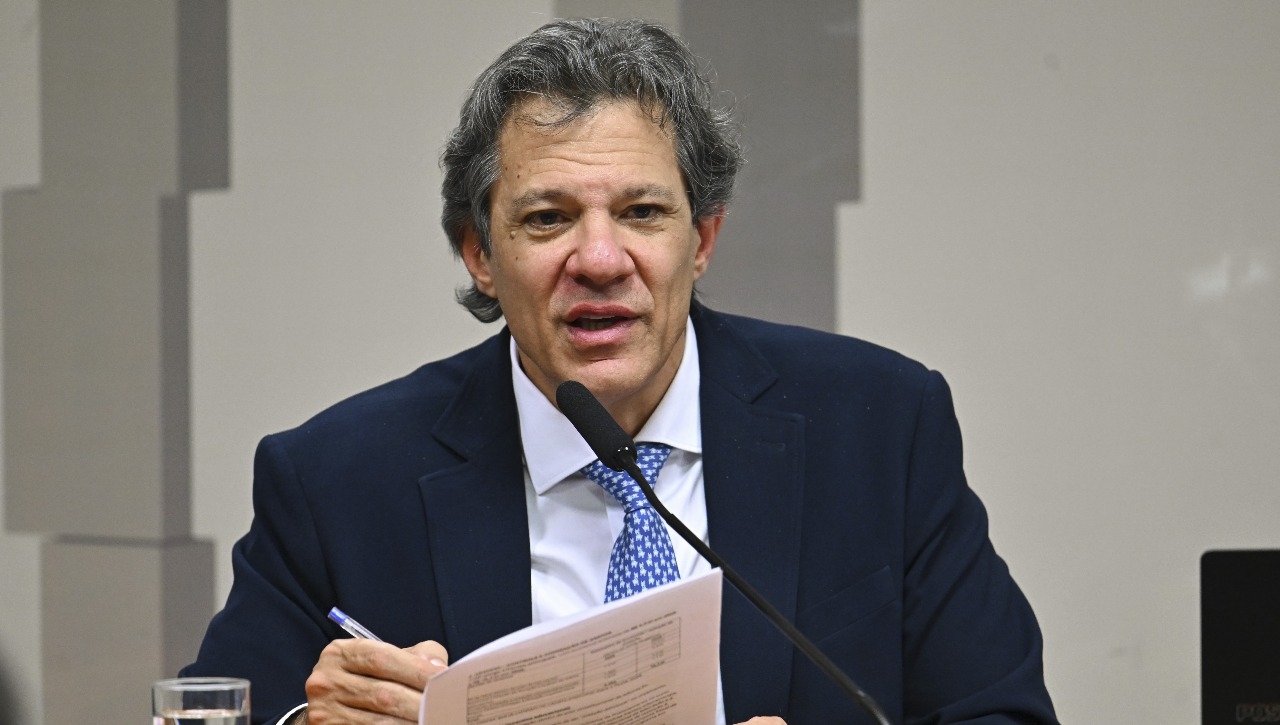
Minister Fernando Haddad emphasized in one of his statements that Provisional Measure 1303 is addressing Brazil’s finances in a way that will ensure the country ceases to have one of the highest levels of inequality in the world. He noted that by 2027, the basic food basket will be tax-free.
“In addition, with the approval of income tax exemption for those earning up to R$ 5,000 (US$920), Brazilians will benefit both in terms of income and consumption.”
Regarding the sports betting and online gaming sector, he was categorical in stating that the purpose of the PM is “to improve public accounts, and that the new tax to be levied on betting companies and financial investments means greater tax justice in Brazil.”
According to him, the proposal is a course correction. “Betting companies went four years without paying taxes. That’s why we established rules and sent them to the National Congress, setting a framework for this economic sector. We proposed an 18% rate on GGR following the international standard, but Parliament reduced it to 12%. Therefore, the PM proposes reinstating the government’s original proposal.”
Deputy Carlos Zarattini, rapporteur of the PM in the Joint Committee, acknowledged the importance of the tax justice proposed by the government, a view echoed by his colleague Lindbergh Farias, who also stated that “Brazilian society supports increasing the tax on gaming, as it serves to promote tax justice.”
Deputy Mauro Benevides Filho said: “The sector generated R$ 170 billion (US$31.25bn) and paid zero income tax. I don’t believe Congress will fail to approve the increase from 12% to 18%. We will work to ensure this increase passes.”
Without being aware of the sector’s financial routine, Senator Cleitinho said: “Regarding the so-called ‘Bets’, it should not go to 18%, it should go to 30%. There shouldn’t even be bets, but since it’s regulated, make these people pay more.
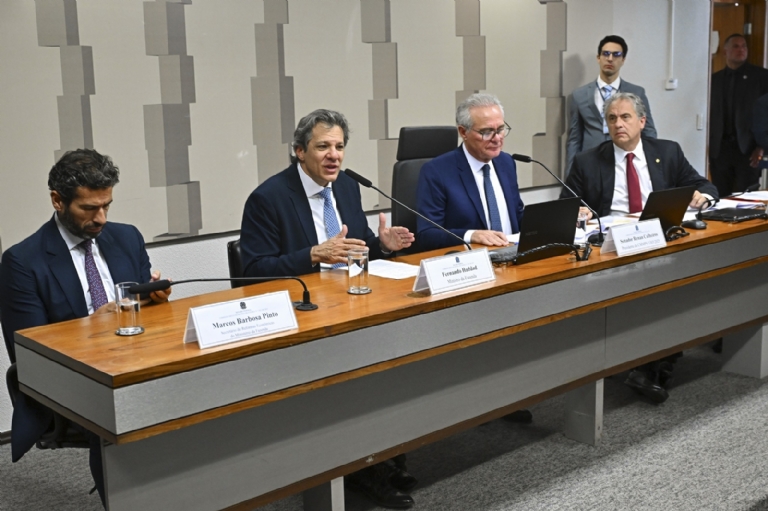
Some of the PM’s proposals were discussed, with lawmakers defending measures for the agricultural and artisanal fishing sectors, as well as the reduction of income tax — even though the subject is not part of Provisional Measure 1303 — as a way to highlight the federal administration’s achievements.
Haddad expressed his hope that the PM would advance in Parliament with constructive and democratic debates so that it can be improved, either through amendments by the rapporteur or in the Plenary, to correct possible distortions.
PM 1303 provides for the taxation of currently exempt investment funds, such as credit bills and real estate funds, which will now be taxed at a 5% rate on earnings. It also includes, among other topics, specific rules for taxing virtual assets, stock exchange operations, asset lending, and foreign investors, and increases the fixed-odds betting tax from 12% to 18% on GGR.
The measure was sent to the National Congress in June to offset the repeal of the increase in the Tax on Financial Transactions (IOF).
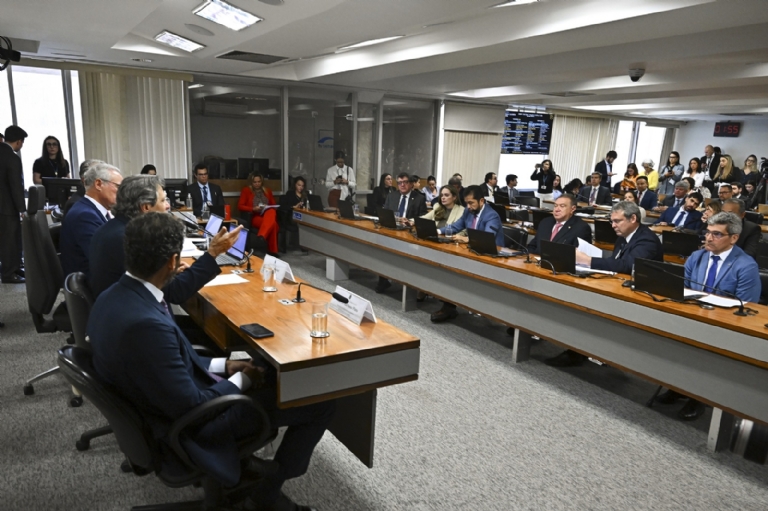
The joint committee is chaired by Senator Renan Calheiros (MDB-AL) and has Deputy Carlos Zarattini (PT-SP) as rapporteur. It has scheduled four public hearings for August to address the various topics of PM 1,303. After the hearing with Haddad, the committee will vote on its work plan and some requests.
With the tax increase, sports betting and online gaming companies will face a total tax burden of over 55%, which industry organizations say is unsustainable. Associations argue that some companies may withdraw from operating in Brazil, while others still awaiting authorization from the Secretariat of Prizes and Betting (SPA) may give up their licenses.
According to the entities, the greatest risk is the increased presence of illegal platforms, which do not pay taxes and could offer more advantageous odds to players.
Industry expresses outrage over tax increase
"The Brazilian Institute of Responsible Gaming (IBJR) expresses outrage over the tax increase for the online gambling sector introduced by Provisional Measure 1.303, currently under debate in Congress. The measure makes it impossible for many companies that trusted and invested in the regulated market to operate, creates legal uncertainty, and threatens revenue collection.
Legalized operators paid R$30 million (US$5.5m) each for the five-year concession, totaling over R$2.3 billion (US$425m) already collected. The sector's planning was structured based on rules and taxes established in December 2024. An abrupt 50% increase in the sector's contribution just seven months after the start of regulation undermines legal certainty and confidence in the sector.
The proposal does not solve the government's structural revenue collection problem and does not address the market's core problem, which is combating the illegal market, which already accounts for 50% of the total market. The way to increase revenue collection cannot be by penalizing those who operate it. within the law, but rather to rigorously combat illegality and protect gamblers, following industry regulations."
Source: GMB