




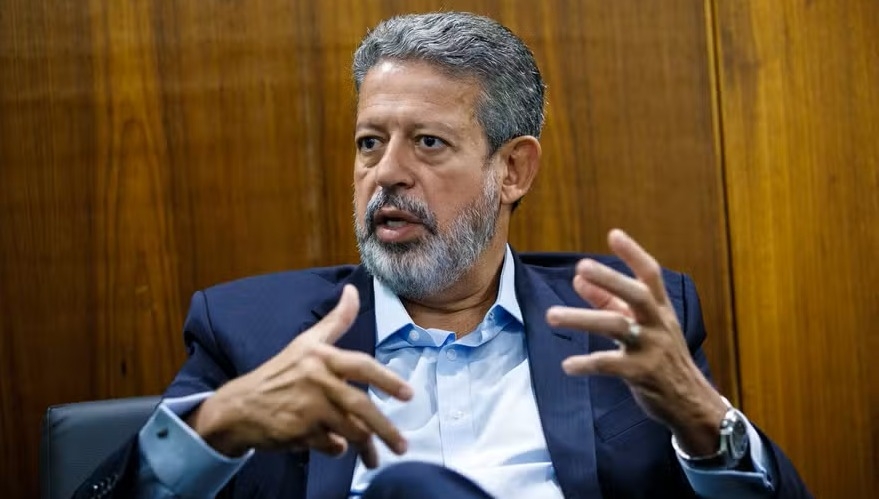
"We have a concern, and we have already raised this concern both with the president of the Central Bank and with the Ministry of Finance, [which are] reports that 50% of the ‘Bets’ are operating illegally without paying taxes. So, if only this half paid taxes or if there were stricter controls on these payment methods to curb these irregularities, revenue would double. Brazil has many details; we need the right numbers to position ourselves,” deputy Arthur Lira said.
The remarks came in response to press questions about the possible taxation of ‘Bets’ as a way to offset the IR exemption. The rapporteur took part in a lunch with representatives of the Parliamentary Front Coalition at the headquarters of the FPE (Entrepreneurship Parliamentary Front) and private sector representatives to discuss the proposal.
The coalition brings together 20 parliamentary fronts linked to the productive sector. During the meeting, a representative from Fiep (Federation of Industries of the State of Paraná) said that, as it stands, the project would leave a “very bad legacy.”
He suggested that the government tax online sports betting at 15% to offset the IR exemption, as well as discourage the population from continuing to gamble. “Today in Brazil, this is a very serious social problem. This could be done via an Ordinary Law. It is a viable alternative.”
Principle of annuality
Lira also spoke about the timeframe for voting on the bill in the plenary. He had previously said that, due to the political climate in the Chamber, the text might only be discussed in December.
President Luiz Inácio Lula da Silva’s government wants the bill approved by the end of September.
According to Lira, the only change that must meet this deadline is the increase in the CSLL (Social Contribution on Net Profit).
“So, the CSLL, if there is any modification to the text for it, the deadline would be September for it to be valid. If there is no discussion about the contribution on net profit, the deadline is the end of the year each time,” he told journalists.
He added that if the rest of the IR exemption text is approved by December, it will still be valid for 2026.
The principle of annuality, in the budgetary and electoral context, is a constitutional provision. It determines that changes in laws, especially those affecting the electoral process, only take effect from the year following their approval.
This ensures stability and legal certainty and prevents sudden changes in the middle of electoral processes.
Sector expresses outrage over tax increase
"The Brazilian Institute for Responsible Gaming (IBJR) expresses outrage over the increase in taxation for the online betting sector brought by MP 1,303, currently under debate in Congress. The measure makes it unfeasible for many companies that trusted and invested in the regulated market to operate, generates legal uncertainty, and threatens revenue collection.
Licensed operators paid R$ 30 million (US$5.5m) each for a five-year license, totaling more than R$ 2.3 billion (US$424m) already collected. The sector’s planning was structured based on rules and taxes established in December 2024. An abrupt 50% increase in the sector’s contribution just seven months after regulation began undermines legal certainty and confidence in the sector.
The proposal does not solve the government’s structural revenue problem and does not address the core issue in the market, which is combating the illegal market, which already accounts for 50% of the total market. The way to increase revenue cannot be to penalize those who operate within the law, but rather to rigorously combat illegality and protect bettors, following sector regulations."
Source: GMB