




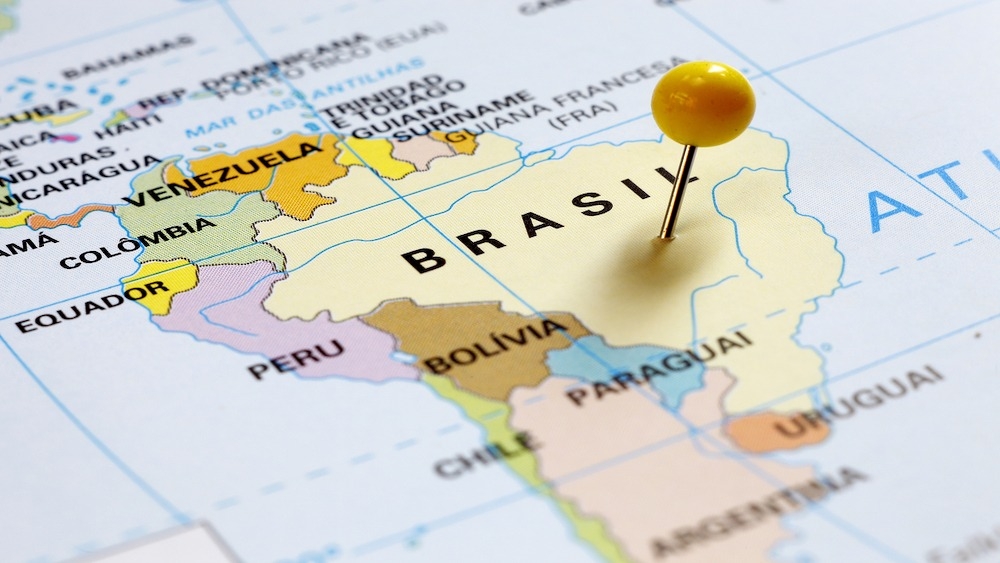
Flutter made vital inroads into Brazil in 2024, acquiring a 56% stake in NSX, the parent company of Brazil-facing brand Betnacional. It has formed a new Flutter Brazil business, which will also encompass its existing Betfair Brazil brand.
The NSX acquisition is already paying off, with Brazil revenue growing 144% during Q2 to US$44 million, offsetting a slight year-on-year decline for Betfair Brazil. This decline Flutter attributed to adverse sports results and re-registration friction from new KYC requirements.
With Brazil Flutter’s fastest-growing market in Q2, Group CEO Peter Jackson was asked whether further LatAm expansion was in the company’s plans.
Jackson responded: “When we sit here and evaluate what the opportunities are around the world, we think about Latin America, we think about many markets where we’re not operating. There’s some interesting opportunities there."
“They’re all in the mix as we think about where we’re going to be deploying our capital. Clearly, the team are thinking about other opportunities around the world in Latin America.”
Jackson and Flutter recognise the scale of Brazil’s potential, saying: “We retain a strong conviction that the market opportunity will be very significant, and that those operators with scale and the best product will win the largest share of the market. Our strategy is to elevate our Brazilian proposition."
“We’ve targeted quick wins in product and marketing, which we expect will deliver significant improvements to the customer proposition on both sportsbook and iGaming over the next 12 months, which we believe will place us well for future success.”
Entain ‘on track’ in Brazil
Entain reported a 21% year-on-year uptick in Brazil NGR during H1, in line with the company’s expectations after a successful transition to the newly regulated market.
Brazil was Entain’s fastest growing market outside the US, powered by strong results from the Club World Cup football tournament, which saw record player activity and turnover.
Brazil accounted for 5% of Entain’s H1 NGR, although CEO Stella David conceded the journey had “not always been plain sailing,” with compliance proving difficult as players of its Sportingbet brand had to re-register to satisfy new KYC requirements.
Tax in Brazil also led to a £28 million hit to Entain’s group EBITDA, with David also warning about the potential for black market growth. This warning comes as the country weighs up making a provisional GGR tax rise from 12% to 18% permanent, as well as new ad restrictions.
“I’m just saying there’s a lot of volatility and that means that we have to be agile in our approach to the market to make sure we navigate the right line,” David said.
BetMGM sets sights on 10% market share in Brazil
In August last year, MGM Resorts International partnered with Grupo Globo, Latin America’s largest media company, to launch the BetMGM brand in Brazil.
In its Q2 presentation, MGM reiterated its desire to reach 10% market share in Brazil through BetMGM, believing its deal with Grupo Globo will allow for greater flexibility in regards to marketing and investment.
“Our launch is making great strides as we are seeing all key measures increasing, including strengthening player fundamentals,” MGM Resorts International CEO Bill Hornbuckle said. “Our bullish long-term view of the Brazilian market remains unchanged.”
BetMGM is investing heavily in Brazil, with that spend focused on product in Q1. It will then shift to marketing in Q2 as the business looks to grow its brand awareness in the market.
“[In] Q2, we turned on the marketing with a reasonable level of aggression and we’re very happy about what we’re seeing,” MGM Resorts International Interactive president Gary Fritz explained.
“Player values are strong down there. We see nothing to give us any concern about the TAM and the long-term health in the market in Brazil.”
Betsson reaches record LatAm revenue in Q2
Betsson enjoyed a hugely successful Q2 in LatAm, with revenue in the region up 35.4% to a record €84.7 million, driven by high customer activity and record deposit levels.
LatAm accounted for 28% of Betsson’s Q2 revenue, having been responsible for 25% of its revenue in Q1, with Peru and Argentina particularly singled out as key growth markets for the group.
“It is gratifying to see how we continue to strengthen our leading market positions in these countries through both strategic and tactical market activities as well as targeted product development,” CEO Pontus Lindwall said.
Sportsbook revenue in LatAm increased from €22.3 million in Q1 to €33.2 million in Q2, offsetting a slight drop in casino revenue from €52.2 million to €51.4 million.
Despite the record quarter in LatAm for Betsson, the company did also note significant headwinds in the region, with further ad restrictions and tax rises seemingly on the way in Brazil. Beyond this Peru and Colombia are also increasing their tax burdens.
However, Lindwall said the company’s view on Brazil hadn’t shifted, saying: “We remain with our view that in any newly regulated market, it’s a little bit shaky initially in terms of competition, marketing spending, potentially regulatory changes.”
Discussing future M&A, Lindwall explained: “We are a careful company. We don’t jump in, we don’t buy the first one we see there. We want the dust to settle a bit and then we will, of course, be ready for both our own expansion and M&A in Brazil.”
Codere Online cautious on Brazil, Mexico performance strong
Codere Online remains hesitant to enter Brazil, despite fellow LatAm market Mexico continuing to prove fruitful for the company in Q2.
Mexico revenue for Codere Online reached €29 million in Q2, 2.8% higher than the €28.2 million reported in Q2 last year, while adjusted EBITDA in the market also edged up from a €0.2 million loss in Q2 last year to a €0.2 million profit.
In the earnings release, CEO Aviv Sher said: “In Mexico, we were successful in growing net gaming revenue despite the 19% devaluation of the Mexican peso and grew our portfolio of active customers in the country by an impressive 36% versus Q2 2024.”
But while the company continues to flourish in Mexico, Sher reaffirmed the company’s caution on Brazil, telling analysts: “We took some of our experience in Spain and took it to Mexico, so we have already proven we are able to replicate our strategy and grow a market."
“I’m sure that Brazil will come up in this call. To replicate [our model] in Brazil, we would need a lot of money.”
In the company’s Q1 results, Codere Online noted it was pulling back in Colombia due to the impacts of the 19% temporary VAT. Sher reiterated this on the post-Q2 earnings call, saying operations had been reduced in the market “to the bare minimum.”
RSI flourishing in Mexico, but Colombia headwinds remain
Rush Street Interactive highlighted Mexico as a particularly strong growth market in Q2, although concerns persist over the tax situation in Colombia.
Monthly active users rocketed nearly 42% across the LatAm region to 403,000 in Q2, with Mexico proving especially fruitful. Revenue from the market here was up 125% year-on-year, as well as increasing 40% from Q1 this year.
Rush Street Interactive CEO Richard Schwartz expects Mexico to become one of the company’s largest markets, saying: “We are very optimistic and continue to believe that it can be a very significant market for us for many years to come.”
However, the VAT in Colombia continues to prove troublesome, with Rush Street Interactive’s decision to offset the tax with a bonusing strategy damaging the company’s profitability in the market.
This led to Q2 net revenue from Colombia remaining flat, despite Rush Street Interactive’s GGR from the market rising by over 70%.
With the temporary VAT set to expire at the conclusion of 2025, CFO Kyle Sauers believes the company’s profitability in the market will reignite from the start of 2026.
Further LatAm expansion could be coming, too, with the company listing Chile, Ecuador, Brazil and Argentina as potential opportunities to add to its existing markets of Colombia, Mexico and Peru.
Super Group LatAm revenue nearly halves after Brazil exit
Elsewhere, Super Group reported declines in LatAm revenue, dropping to US$5 million in Q2 from US$9 million in the same quarter last year. Across H1, revenue in the region also fell from US$16 million to US$10 million.
Super Group attributed this to poor performance in Mexico, as well as the withdrawal of its Betway brand in Brazil.
For Kambi, the regulated market launch in Brazil helped the supplier to increase operator turnover in the Americas by 3.4%, despite a “slower than expected start.”
The Club World Cup proved particularly popular in LatAm for Kambi, driving approximately 80% of bets across its global network.
Source: iGB