




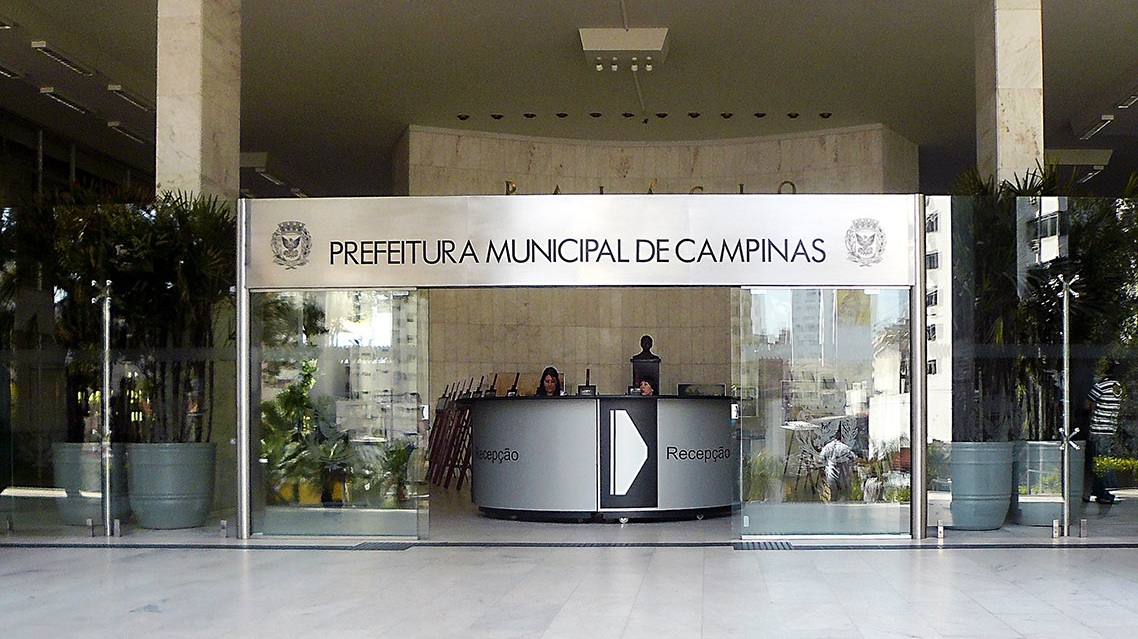
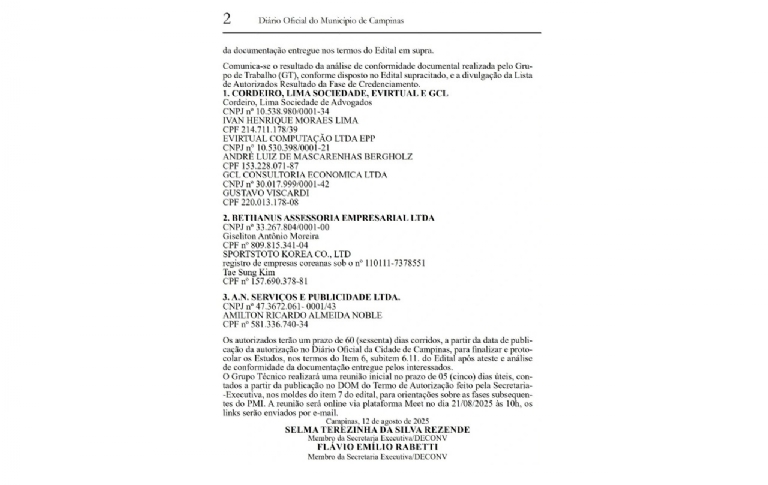
Five companies had initially qualified to present their studies, but two (Ecofun and Beats) were disqualified for failing to meet the requirements set out in the notice. The three approved companies are:
* A.N. Serviços e Publicidade Ltda. (owned by Amilton Noble, a lottery specialist)
* Cordeiro, Lima Sociedade Evirtual and GCL Consultoria
* Bethanus Assessoria Empresarial Ltda.
Eligible companies will have 60 days, starting from the orientation meeting to be held virtually on the 21st, to submit these documents. The meeting aims to establish criteria and clarify any questions from those eligible for the Expression of Interest (PMI) Procedure.
"The committee created to oversee the entire Locamp implementation process analyzed the initial documents, which, in addition to the work plan, include the certificates. It will also, together with a private consultancy, analyze these studies, which will be presented," explained Finance Secretary Aurílio Caiado.
The company that will manage the lottery will be selected through a bidding process. "The concession will be awarded to the company that meets the requirements of suitability, technical capacity, and financial capacity," Caiado added.
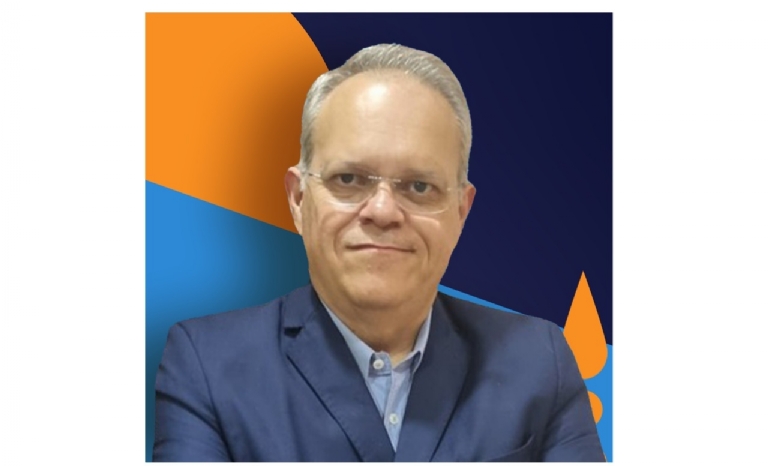
"I am delighted to share my accreditation to conduct the studies for the PMI (Municipal Planning and Implementation Plan) for the establishment of a municipal lottery in Campinas. The city is among the 5 largest GDPs in São Paulo and among the 15 largest in Brazil. Its relevance on the national stage will be a game-changer for municipal lotteries," stated Amilton Noble.
"I hope the Campinas municipal government uses the PMI tool to truly listen to experts who present feasible models. The PMI has been undervalued by some federal entities, which are not leveraging the expertise of participants and adopting unsustainable models that are defined without technical criteria," he warned.
With over 30 years of experience in the lottery market, Amilton Noble said he will do his best to propose a model that meets the needs of all three stakeholders in a lottery operation. He cites:
1) The players, with appropriate payout proposals that value their position;
2) The municipal government, to use the resources for social causes that serve those most in need;
3) The operator, who needs to believe in a sustainable business model that maximizes investment returns and, most importantly, justifies the risk.
"I will propose a balanced model that does not prioritize excessive tax collection, which has been widely adopted at the federal and state levels, and in the country's largest municipality, fatally wounding an industry that, if well-managed, could be fundamental to the adoption of public policies that will benefit Campinas society," he emphasized.
"I will also advocate for an adequate payout to allow competition, especially with the illegal market, and with fair compensation for operators," he concluded.
Locamp
Created by Law 478 of 2024, the service is another way to raise funds that will be allocated to Social Assistance, Sports and Leisure, and Culture and Tourism.
The Locamp operator will be able to implement all types of games authorized by the Federal Government in the city, including scratch cards, lottery betting (such as Mega-Sena, Lotofácil, Quina), sports betting (such as Timemania), and other products to be defined.
After paying the prize, the lottery operator will transfer 13% of its revenue to the City Hall, with 12% going to the areas listed in the law and 1% going to the management costs, which will be covered by the Finance Department. The remainder, after deducting maintenance expenses, will be the company's profit.
Source: GMB