




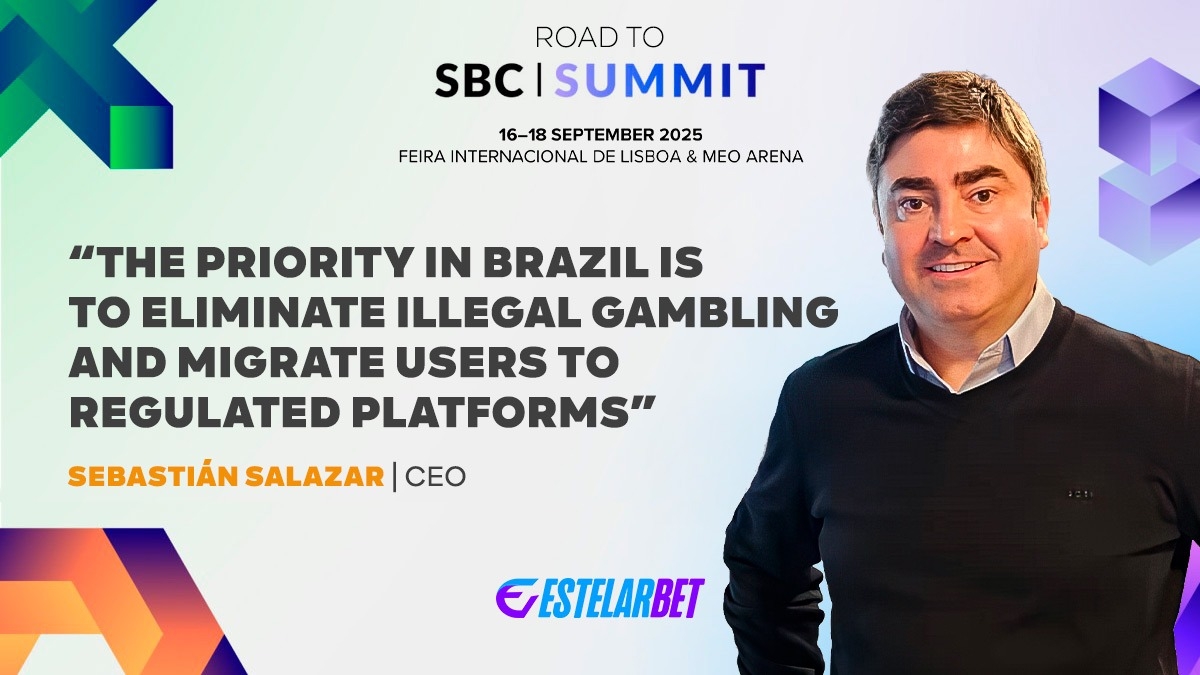
GMB – What does it mean for you to participate as a speaker at such an important event like SBC Summit 2025?
Sebastián Salazar - Without a doubt, it’s one of the most important events of the year. I don’t see it only as a privilege to participate, but also as a great responsibility to represent Latin America—and of course, Estelarbet—in the best possible way.
What will be the main focus of your participation on the panel?
I’d say it’s to update the audience on everything that’s happening in Latin America regarding the implementation of current regulations, as well as to comment on what’s happening in Chile with the legislation under debate.
Which key points will be addressed in your panel within the Brazil and Latin America track?
We will discuss how different operators have consolidated their presence in these newly regulated markets, and the negative impact that illegal gambling has on them.
What importance do you give to having a dedicated agenda for Brazil at a global event like SBC Summit?
Brazil is the most important market in Latin America, so without a doubt, a dedicated agenda for such a relevant market is necessary.
What opportunities does the Brazilian iGaming market currently offer, in your view?
The market presents multiple opportunities given its size and the penetration of gambling across different segments. However, this is also a moment of consolidation for operators, and legislative noise doesn’t help.
Just a few weeks ago, we saw the Minister of Finance propose a tax increase on the sector, despite the fact that at least half of the market comes from illegal websites. The Ministry’s signal isn’t the best—the priority should be eliminating the illegal supply so that players migrate to the regulated offering, and only then can revenue collection increase.
As CEO of Estelarbet, what are the main challenges and opportunities you see today in the Latin American market?
In Chile, we are facing a major challenge with the regulation in progress. I had to present before the Senate Finance Committee to share operators’ perspectives, since in many countries legislation advances with a certain bias or aversion towards gambling.
As I mentioned about Brazil, tax hikes are a problem, and in Peru, the situation is also unfavorable after the veto of the law that clearly defined the tax base for the Selective Consumption Tax. Our industry requires constant dialogue with policymakers to explain the impact of poorly designed or technically weak regulations.
What will be the main challenge for companies looking to enter or consolidate in Brazil?
The main challenge will be consolidating operations, considering the major players already active in Brazil and the resulting impact on advertising costs in such a competitive environment. For new entrants—unless they are global giants—a niche-focused strategy may prove more efficient from an operational standpoint.
What kind of regulation do you expect to see implemented in Chile in the coming months?
It’s hard to say whether the current government will manage to pass a law regulating online gambling within the next seven months, given the upcoming change in administration.
If I’m honest, I don’t think so. However, I do see it as possible that the new legislation will remove the ban on current operators, reduce taxes in line with comparable markets, and eliminate advantages included in the bill for some incumbents, which in my view harms free competition.
How do you see Estelarbet’s role in the development of the iGaming market in Latin America?
For Estelarbet, it is essential to consolidate in the new regulated Chilean market and reactivate operations in Peru with the licenses currently available. This focus will remain at least through 2026 and 2027, after which we will evaluate other markets of interest on the horizon.
What are your expectations for the event in terms of networking and strategic alliances?
Expectations for SBC Lisbon this year are high. The first edition last year set the bar very high. This year there will also be multiple opportunities to engage with close friends and industry partners and address their specific needs. I believe the Legends Cup charity event will be an extraordinary moment to interact with everyone.
What do you expect to learn or exchange with other industry leaders at the event?
Mainly topics related to regulation in the region. It’s also very interesting to follow developments in regulation and payment providers. As you know, I am co-founder of ProntoPaga, a company through which we aim to become the leading payment provider for the industry by 2027, from Mexico southwards.
The situation with Pix in Brazil, the impact of Bre-B in Colombia, the regulatory changes for card operators in Chile, or Peru’s opening up with interoperable digital wallets and QR codes—all are examples of changes that create major opportunities. This year, we are launching our operations in Argentina, and we are confident we will deliver a significant change in payment processing for the local industry.
What is your vision for the future of iGaming in Latin America, especially after Brazil’s regulatory progress?
Calling it consolidation would downplay what’s happening—I would say it’s more of an establishment of the industry. The expectation is that we can influence decision-makers to ensure legal security for investments in the region, and that regulatory conditions in different countries don’t change so quickly, but are instead consensual and reasonably applied.
Achieving political stability in Latin America is very difficult, and this has an even greater impact on the legal security offered by governments.
What message would you like to leave for participants interested in the Latin American betting and online gaming market?
Latin America is a region full of opportunities. The regulations being implemented or debated allow investments to become profitable more safely and, if necessary, over longer time horizons.
But for that to happen, it’s essential to analyze the region in all its nuances. This is especially evident in countries like Brazil, Mexico, and Colombia, where cultural diversity is expressed across states or regions. Far from being a problem, this is an opportunity: to engage them in their own language, with local codes and consumption habits.
The many “colors” of Latin America are part of the value proposition operators must bring to get closer to their audience. By doing so, they can create true fans of their brands, just like we see in other regions with more consolidated offerings.
Source: Exclusive GMB