




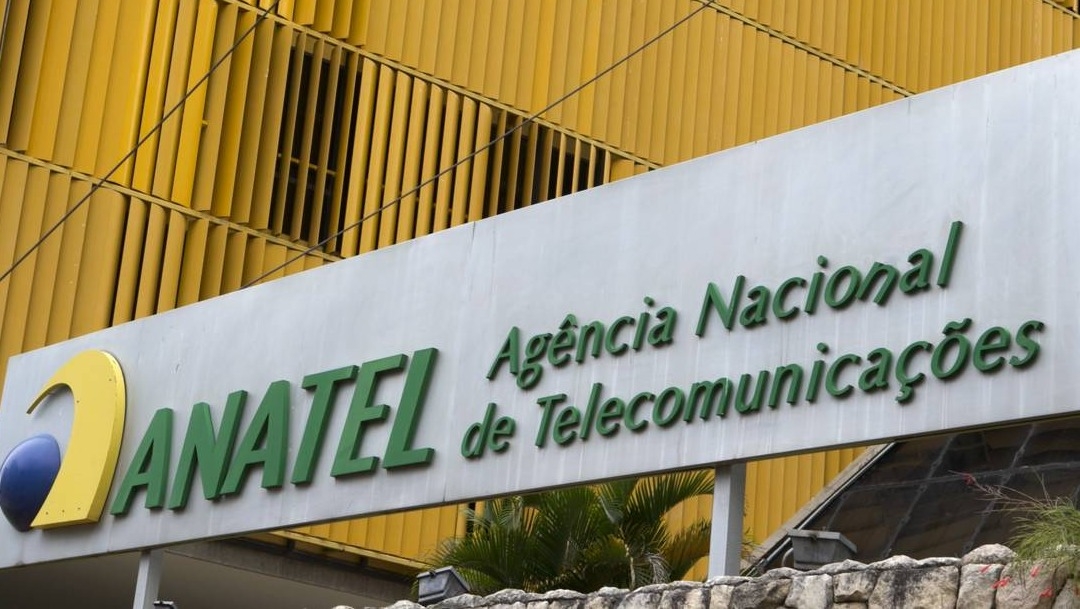
This year, the SPA’s two main objectives have been to ensure that licensed companies comply with regulations and to combat the illegal market. By the end of the first half, the SPA had recorded 15,463 pages taken down by Anatel since October 2024.
In addition, the SPA reported that 17.7 million Brazilians placed bets on websites and apps of the 182 betting companies authorized by the Secretariat.
“This report has fundamental importance for regulation. It provides concrete data on regulatory actions, addressing issues such as oversight and control, in addition to the first figures that reflect reality rather than mere estimates,” said Regis Dudena, Secretary of Prizes and Betting.
“From now on, the debate on Brazil’s fixed-odds betting market can be based on stronger evidence, allowing us to move forward with regulation based on facts,” he added.
Legalized since 2018 but lacking proper regulation until 2022, the betting market in Brazil grew without control. Beginning in 2023, new rules started to be implemented, with the bulk published in 2024. Since the start of 2025, all are in force and compliance is being monitored. Of the 66 inspection cases involving 93 betting companies, 35 resulted in sanctions in the first half of the year.
In addition to blocking illegal sites, two other fronts in the fight against the illegal market are monitoring and supervising financial system institutions, which are prohibited from processing transactions for unauthorized betting companies, and combating advertising carried out by illegal operators, with cooperation from major search engines and social media platforms.
In the financial system, an agreement with the Central Bank defined that SPA is responsible for monitoring, supervising, and, if necessary, sanctioning financial institutions (FIs) and payment institutions (PIs). The Secretariat ordered institutions working with the illegal market to close those clients’ accounts and notify SPA whenever they identify suspicious accounts engaged in such activity.
In the first half, 24 FIs and PIs made 277 reports to SPA and closed 255 accounts, both individual and corporate, due to involvement with illegal fixed-odds betting. During this period, SPA officially notified 13 payment institutions, requesting information and instructing them to close accounts. As a result, 45 companies operating in the illegal fixed-odds betting market had their accounts closed.
In advertising, progress came through an agreement with the Brazilian Digital Council, a domestic association that brings together eight of the country’s leading technology companies, including Google, Meta, TikTok, Kwai, and Amazon. This partnership seeks greater efficiency in removing ads from illegal companies, as well as detecting and removing profiles and ads disguised as organic content in violation of regulations.
In combating illegal advertising on social networks, 120 cases were concluded, resulting in the removal of 112 influencer pages and 146 posts.
Profile of bettors
Of the 17.7 million Brazilians who placed bets in the first half, 71% were men and 28.9% women, according to the first semiannual report from the General Betting Management System (Sigap) of the Ministry of Finance, which receives daily information from all bets placed with the 76 companies authorized to operate fixed-odds betting.
By age group, the largest share of bettors was between 31 and 40 years old (27.8%). Those aged 18 to 25 accounted for 22.4%; 25 to 30 years, 22.2%; 41 to 50 years, 16.9%; 51 to 60 years, 7.8%; and 61 to 70 years, 2.1%.
“Our goal now is to publish regular reports on SPA’s activities and the evolution of Brazil’s fixed-odds betting market, honoring this government’s commitment to transparency and, above all, ensuring accountability to society regarding the responsibilities of both the State and private actors,” said Secretary Regis Dudena.
Gross revenue
The gross gaming revenue (GGR) of authorized companies totaled R$ 17.4 billion (US$3.2bn) in the first half. This figure represents total bets minus payouts and can be seen as the effective spending of bettors during the period. The average spending per active bettor was approximately R$ 983 (US$181) per semester, or R$ 164 (US$30) per month.
According to the Federal Revenue’s June tax collection report, betting companies paid approximately R$ 3.8 billion (US$700m) in taxes in the first half of 2025. This amount includes federal taxes such as corporate income tax (IRPJ), social contribution on net profit (CSLL), PIS/Cofins, and social security contributions, as well as the 12% of social contributions mandated by law, totaling R$ 2.14 billion (US$394m).
Additionally, SPA collected approximately R$ 2.2 billion (US$405m) from authorization fees paid by licensed operators and around R$ 50 million (US$9.2m) in supervisory fees from companies in the sector in the first half of the year.
Source: Agência Brasil