



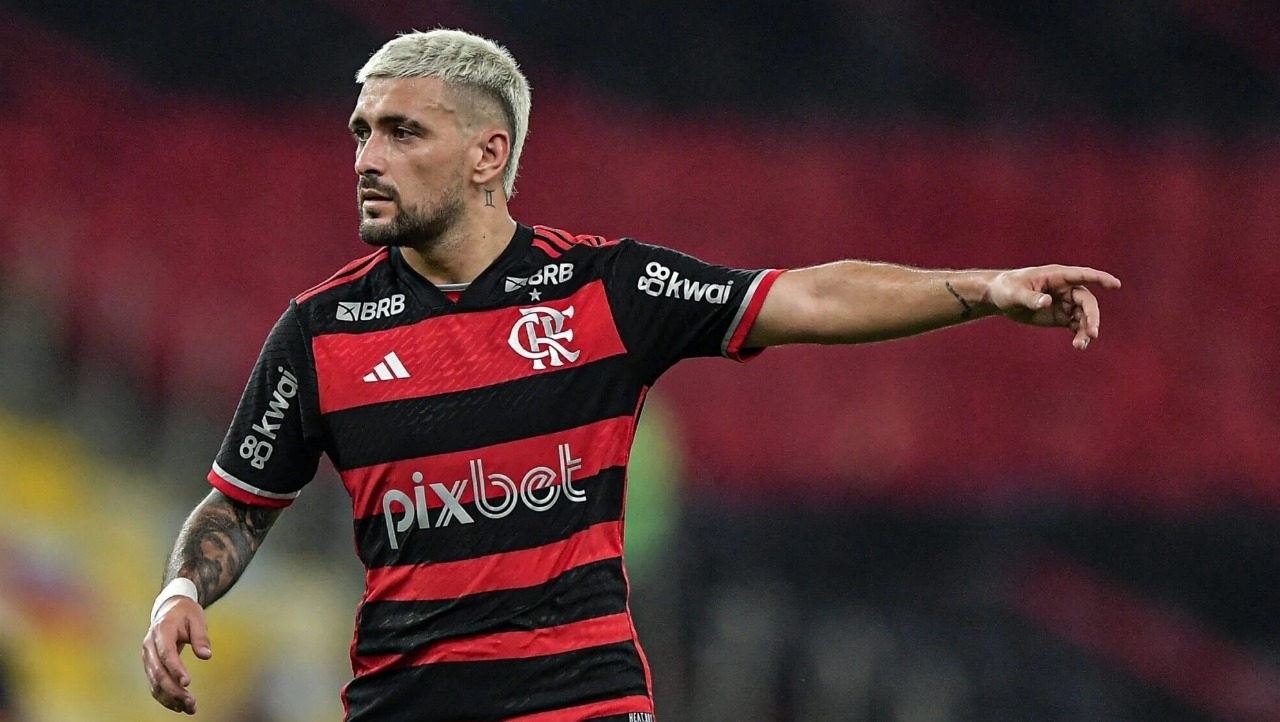
Earlier last month Flamengo, widely recognised as the biggest football team in Brazil, announced it was terminating its master sponsorship from Pixbet, amid rumours of late payments.
The alleged circumstances around the termination of the sponsorship, which had been touted as the largest in Brazilian football history at around BRL470 million (US$87.1 million) over four years, fuelled rumours of financial uncertainty at Pixbet.
It also marked the continuation of a somewhat tumultuous 2025 for Pixbet. The company has seen its licence to operate in the newly regulated online Brazilian market suspended and reinstated on multiple occasions due to technical failures.
Has Pixbet overextended?
Market leader Betano has since taken over as Flamengo’s main sponsor in a deal superseding that of Pixbet. Reports suggest the new agreement is worth BRL250 million (US$46 million) a year.
According to H2 Gambling Capital Managing Director Ed Birkin, Pixbet holds a market share of 2% in Brazil with NGR of BRL316 million (US$58 million) for the six months to 30 June 2025.
With Pixbet’s Flamengo sponsorship working out at BRL62.5 million (US$11.5 million) over six months, Birkin estimates 20% of the company’s NGR was being spent on the Flamengo deal alone.
In comparison Betano, the “clear market leader” according to Birkin, has generated NGR of BRL3.5 billion (US$645 million) in Brazil in H1. Although its sponsorship cost is rumoured to be double Pixbet’s at BRL125 million (US$23 million) every six months, that equates to just 3.5% of Betano’s NGR.
With Birkin estimating Betano’s pre-tax and post-bonus NGR is BRL19.5 million (US$3.6 million) a day in Brazil, it would take it just 13 days to cover a full year of the Flamengo sponsorship. For Pixbet, it would take 72 days of Brazil operations, even with its Flamengo sponsorship costing half the amount.
In Birkin’s view, that huge disparity demonstrates financial overextension on Pixbet’s part.
“If one part of your marketing budget is 20% of your net gaming revenue, suddenly it doesn’t become a viable business to be spending that much on marketing, unless you’re happy to run at a loss for a certain period of time,” he explains.
International brands dominating in Brazil
H2’s current podium positions are all filled by international entrants to the Brazilian market, with Betano followed by Bet365 and Superbet in second and third, respectively.
Prior to the launch of the regulated market, many hypothesised that local operators would dominate due to their enhanced knowledge of Brazilian markets and culture.
But Birkin thinks this was overblown, as evidenced by the international brands of Betano, Bet365, Superbet and Sportingbet currently boasting a combined market share exceeding 50%. These brands have brought in local talent to chart a path to growth, albeit with the resources of international giants to support their plans.
“The general view I heard when going to Brazil is that you need to understand international operators can’t just come in and do well, and it’s going to be local brands that win out,” Birkin says.
“The fact is that’s only true if international operators don’t have a local presence.”
Are smaller operators in trouble?
Back in June, Ficom Leisure founder and M&A expert Christian Tirabassi predicted a top-heavy market in Brazil. He told iGB that 10-12 brands would dominate with smaller operators hampered by high financial barriers to both entering and remaining in the market.
Despite holding just a 2% market share, Pixbet is the regulated Brazilian gaming market’s 11th-biggest operator, according to H2. Of the 173 licensed brands Birkin and H2 are tracking, remove the top 19 and the remaining 154 hold on average a market share of around 0.1%.
With a raft of operators making less money than Pixbet, Birkin suggests smaller operators could run into similar trouble, especially with tax rises and new ad restrictions seemingly on the way.
Birkin compares the Brazilian market to the US, where a flurry of operators entering the market has since dwindled, with the likes of Betway, Evoke and Unibet exiting in 2024 due to the dominance of bigger companies.
“If the 11th-biggest operator can run into trouble, then so can the 10th and the 9th and the 8th, and so can the 99th, 100th, 110th, 120th,” Birkin adds.
Pixbet’s Flamengo gamble doesn’t pay off
Pixbet took a gamble with its Flamengo sponsorship that hasn’t paid off, according to Birkin.
Flamengo launched a new betting brand last year called Flabet, which was managed by Pixbet and featured the club’s branding.
With Flabet holding an average market share of just 0.15%, Birkin agrees the specific targeting towards Flamengo fans disregarded the rest of the brand’s potential target market.
He makes the point that while Brazilian football is incredibly popular in its home country, it doesn’t boast the same worldwide popularity as the English Premier League and other European football competitions.
Despite Pixbet’s troubles, Birkin believes there is still a place for smaller operators in the Brazilian market, provided they maintain a sensible financial approach.
“Bear in mind, Pixbet are the 11th-biggest operator, but you have someone who’s down at 20th who’s maybe less than half the size,” Birkin concludes. “But if they’ve got better cost control, then it’s a better run business.
“You can run a smaller business than Pixbet, but you just have to have cost control. You can’t be spending BRL125 million (US$23 million) a year sponsoring Flamengo. You’re not making that sum of money.”
Source: iGB