



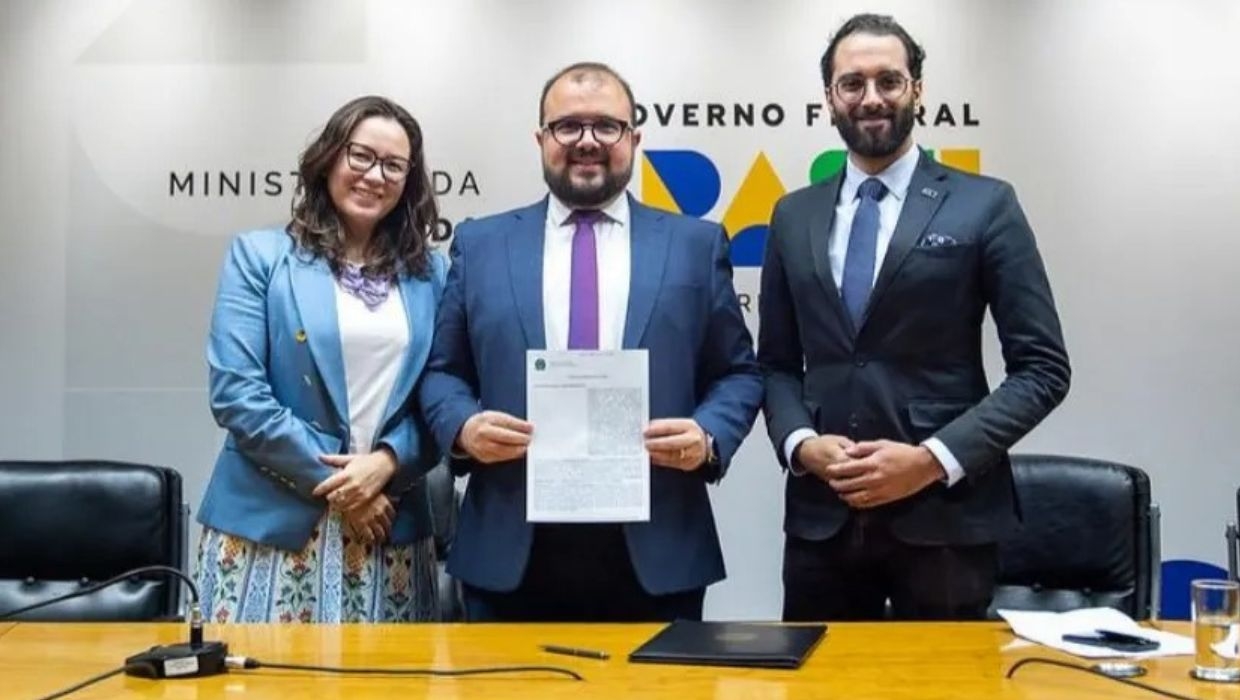
According to a report by Valor, the technology giants are represented in this partnership by the Digital Council of Brazil, which signed the cooperation agreement with the Secretariat of Prizes and Betting (SPA) in July.
The Council stated that it believes the partnership will bring benefits to Brazil, especially in tackling illegal websites and irregular online advertising. The agreement, according to the entity, also reinforces compliance with legislation that protects children and adolescents in the digital environment.
The idea is for companies to take down advertising links for illegal 'Bets', often promoted by influencers, in order to limit the spread of such content and reduce the reach of unregulated platforms among users.
According to Regis Dudena, Secretary of Prizes and Betting, the most effective advertising for attracting new bettors is that which generates clicks on social media, search engines, and the internet in general. For this reason, the government’s strategy has been to focus its efforts on curbing the spread of illegal 'Bets' in these channels.
“Only betting operators with national authorization and a .bet.br domain extension are allowed in the country,” said Dudena.
“One thing is to go to the internet provider and say: ‘this link cannot be accessible in Brazil.’ Another is to go into an influencer’s profile on a social network and say: ‘this ad cannot exist.’ That’s why in advertising we have been acting with the collaboration of the social networks and search engines themselves,” he explained.
According to the secretary, the notification process by the Ministry of Finance to remove illegal content was already foreseen in the legislation. The betting law itself, Dudena noted, authorized the Ministry to administratively notify “big techs” to remove illegal advertising about 'Bets'.
What changed with the agreement, he explained, was the creation of a “dedicated channel” by the “big techs,” which the secretary described as a specific space for sending notifications regarding content that violates the law.
“It could be a tool, as some already have, like a website where you log in and inform: ‘I am the regulator, and I want this content removed.’ Or, at the very least, an email address that you can be sure will reach someone responsible for handling it,” he said.
The cooperation with technology companies also foresees that they will begin to proactively remove illegal content. According to Dudena, this is “relatively easy to do,” since there is already a list of which companies are authorized to operate in Brazil.
He added that all betting operators authorized by the federal government use the .bet.br domain extension. “So if there is a betting company with national operations that doesn’t have the .bet.br domain, it is not authorized – it is an illegal company,” he stressed.
Despite this, Dudena explained that the measure is collaborative; there is nothing that compels companies to autonomously take down illegal content.
The agreement’s work plan also provides that companies moderate advertising content from both authorized and unauthorized 'Bets', removing ads that violate legislation or regulations.
According to the secretary, this task is challenging because it involves value judgments about what is or isn’t illegal. In such cases, the government’s plan, he explained, is to build a sort of gradient of content, ranging from those that are clearly illegal – such as unlicensed operators – to borderline cases that require more careful assessment.
“This is so we can reach a safe zone, where we can jointly establish, within the scope of the agreement, clear criteria on what should be removed,” said Dudena.
Source: Valor