




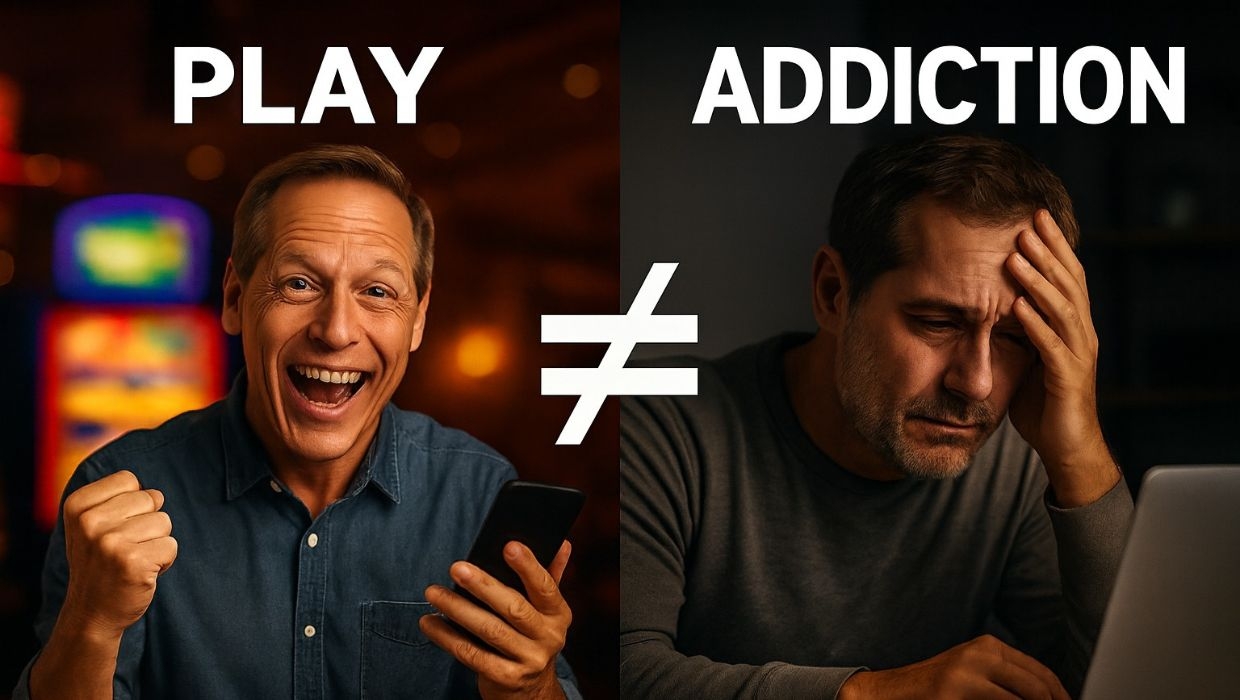
Playing has always been part of humanity. Games have endured through centuries because they meet something essential in us: imagination, competition, interaction, joy. When play is healthy, it’s fun, light, and meaningful.
But fun also carries risk. When the pursuit of excitement loses balance, when stimulation no longer satisfies, play can turn into compulsion. That’s when addiction emerges—the disorder that strips games of their very purpose.
This is the real enemy. And it cannot be fought with isolated measures alone. Deposit limits, mandatory breaks, warning messages—they all matter, but they are partial fences. The reality is that players move. They cross platforms, open multiple accounts, chase promotions, shift from one operator to another. What a single operator sees is just a fragment. The bigger risk is in what only the industry can see collectively.
Responsibility, then, has three layers. First, the individual: players need clear information, easy-to-use tools, and the space to make conscious decisions. Next, the operators: they must understand that helping customers manage impulses doesn’t reduce revenue—it builds loyalty. Protecting players doesn’t cost bets, it creates trust, retention, and lifetime value. Finally, the industry as a whole: sharing intelligence, recognizing collective risks, and responding together.
Too often, what’s called “responsible gaming” is still treated as a regulatory checkbox. The bare minimum is implemented to meet compliance, not to truly solve the problem. That narrow, defensive approach reduces a strategic tool to a formality. It’s time to change the game.
Because responsible gaming is not the enemy of revenue. Done well and communicated honestly, it creates loyalty, engagement, and growth. In a market where every product looks the same—identical odds, cloned layouts, aggressive offers—trust is the one true differentiator.
Trust is also what sustains the industry’s social license. Without it, no regulatory license will last.
The challenge is not just to comply with rules, but to anticipate risks. It’s not enough to identify compulsive behavior after it takes hold. We must map patterns, understand player life cycles, and intervene early, before entertainment turns into addiction. And that requires technology.
If the industry doesn’t protect play, society will choose addiction for it.
Thiago Iusim
Founder | CEO @ Betshield Responsible Gaming - www.thebetshield.com