




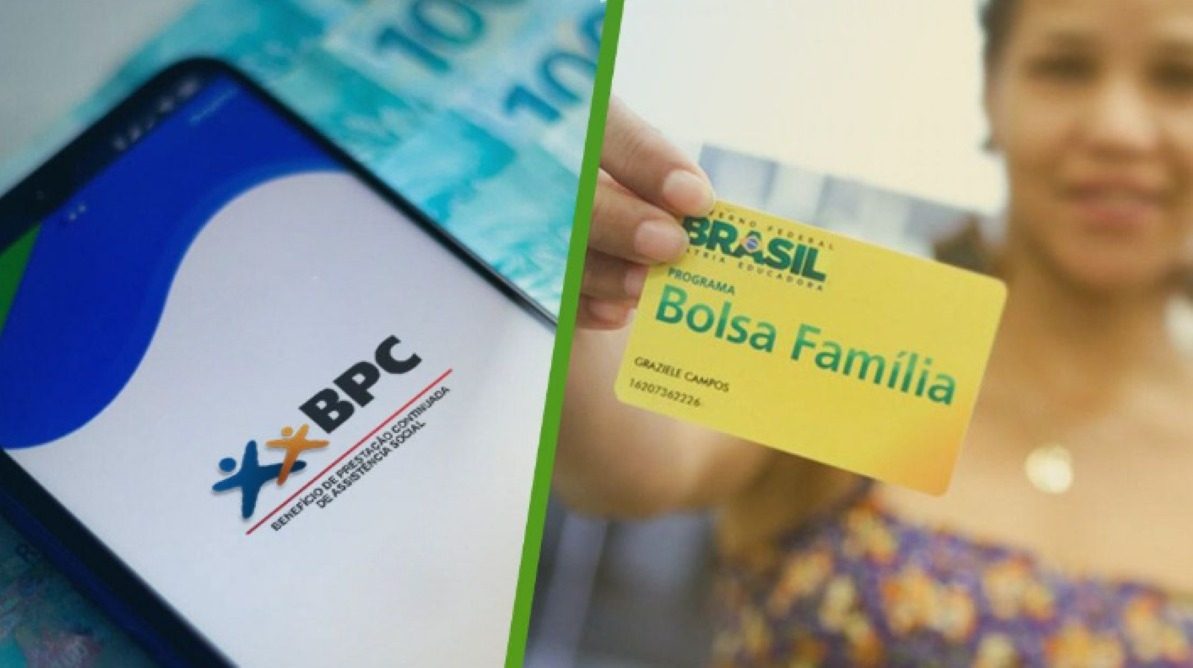
According to Regis Dudena, Secretary of Prizes and Betting at the Ministry of Finance, the government will be fulfilling the STF’s determination to adopt measures preventing the use of social assistance funds for online betting ('Bets').
In August, the government paid benefits to about 19.2 million families in Brazil, equivalent to more than 50 million people. Meanwhile, the BPC had 3.75 million beneficiaries in July this year, according to the Ministry of Social Development and Assistance.
In an interview with g1, Dudena explained that, by law, individuals must register their CPF (tax ID) and a bank account to hold accounts with online betting companies. Only then can they make deposits into their Bets accounts, also in their name, to place wagers.
By the end of the year, the government will require the approximately 80 licensed sports betting operators in the country to query, via a digital system provided by Serpro (Federal Data Processing Service), whenever a new bettor registers or makes a new deposit into their 'Bets' accounts.
“It’s a centralized registry with the data of beneficiaries from these two major social programs. Betting operators will have to check via API, but they won’t have access to the full list. They will only query at specific points to ensure beneficiaries cannot deposit money,” said the secretary.
According to Dudena, the goal is for the new system to be operational as early as September, with a one-month adaptation period, and fully enforced by year’s end.
Bolsa Família and BPC
The BPC, equivalent to one monthly minimum wage of R$ 1,412 (US$ 259), is paid to low-income elderly people or those with disabilities. Eligible individuals must:
- Be 65 years or older, or have a disability;
- Be Brazilian by birth or naturalization;
- Hold Portuguese nationality with residence in Brazil;
- Have a family income of up to ¼ of the minimum wage per person (R$ 353 / US$ 65), calculated using CadÚnico and INSS data.
For Bolsa Família, per capita monthly income must be up to R$ 218 (US$40), with all household members registered in CadÚnico. The minimum benefit per family is R$ 600 (US$110).
Additional cumulative benefits include:
- R$ 150 (US$28) per child up to 6 years old;
- R$ 50 (US$9) per pregnant woman;
- R$ 50 (US$9) per youth between 7 and 18 years old;
- R$ 50 (US$9) per infant up to 6 months old.
Monthly betting volume
The Secretary of Prizes and Betting downplayed Central Bank estimates that online betting in Brazil amounts to R$ 20–30 billion (US$3.65–5.5bn) monthly.
He explained that these figures reflect the full flow of money — deposits and withdrawals — not the actual losses borne by players. Since payouts average 93% (RTP), much of the same money circulates multiple times.
Based on Ministry of Finance calculations, the effective monthly betting expenditure (wagers minus payouts) is about R$ 2.9 billion (US$532m), consistent with the R$ 17.4 billion (US$3.19bn) reported for the first half of 2024.
Annually, this equals roughly R$ 36 billion (US$6.6bn) in effective player spending — not the R$ 20–30 billion per month suggested by Central Bank estimates.
The ministry also reported that 17.7 million Brazilians placed bets online in the first half of 2024, with average spending per active bettor of about R$ 164 (US$30) per month. According to Dudena, this represents around 12% of the country’s adult population, similar to other markets.
“From now on, we’re beginning to look more closely at bettors themselves. We know the average spend is R$ 160 (US$29) per month, but how is that distributed? Do we have many low-spending bettors and just a few heavy spenders? That’s the detail we’re starting to analyze now,” Dudena concluded.
Source: g1