




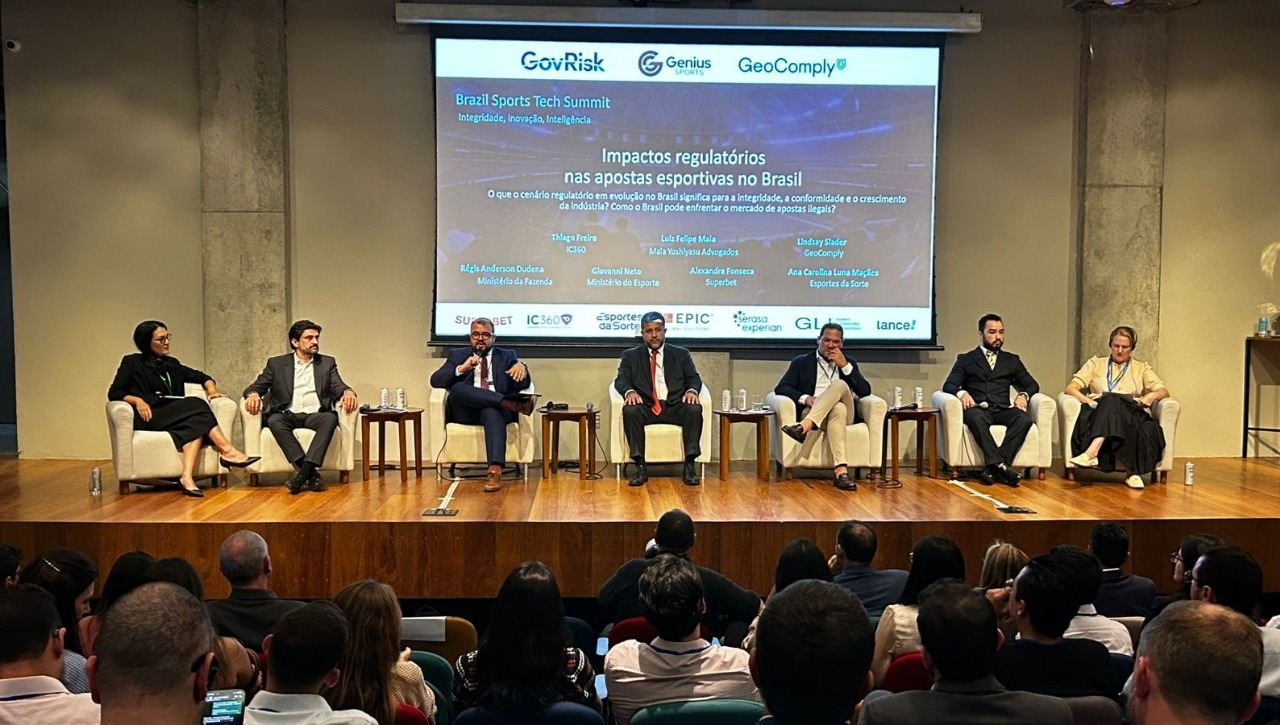
GovRisk held the fourth edition of the Brazil Sports Tech Summit this Thursday (4) at the Football Museum in São Paulo, featuring discussions on technology, sports integrity, and sports betting. Supported by Genius Sports and GeoComply, and sponsored by Superbet, Esportes da Sorte, GLI, Epic, and IC360, the meeting brought together federal authorities, industry players, and sports entities for a day of intense discussions.

Among the topics, a key panel featured Regis Dudena, Secretary of Prizes and Betting (SPA) at the Ministry of Finance; Giovanni Rocco Neto, National Secretary of Sports Betting and Sports Development (MEsp); Alexandre Fonseca (CEO of Superbet Brasil); Ana Carolina Luna Maçães (Compliance Manager at Esportes Gaming Brasil); Luiz Felipe Maia (Partner at Maia Yoshiyasu Advogados); and Thiago Freire (IC360 Attorney in Brazil). The session “Regulatory Impacts on Sports Betting” was moderated by Lindsay Slader (SVP Compliance, GovRisk).
Regis Dudena, Secretary of Prizes and Betting, stressed that the major challenges ahead are monitoring and proper oversight of licensees and of the entire sector, as well as combating illegal operators.
“We will continue to take down illegal sites, even though it is a Herculean task, with the support of Anatel and also through the advertising of clandestine operators who flood their networks with countless messages linking to their platforms. For this, we have established an agreement with the Digital Council, which represents the main social networks and major search engines. We want the networks themselves to be engaged in removing links to illegal sites.”
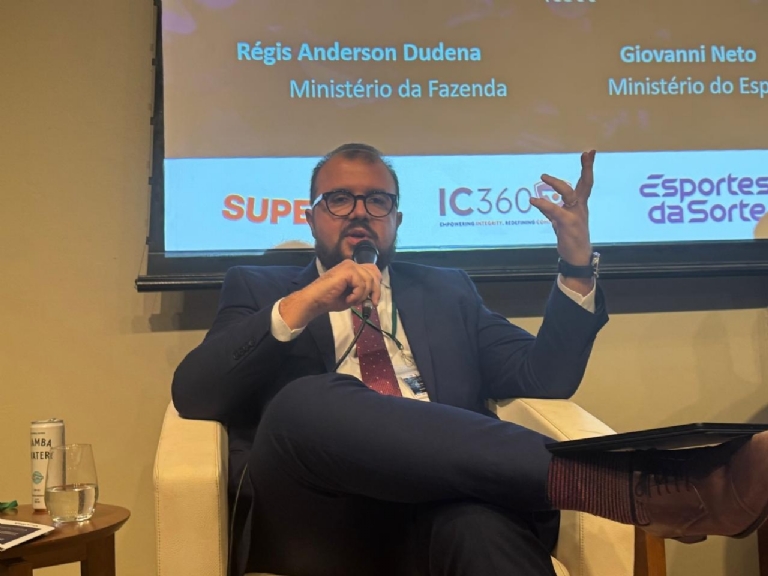
In addition, Dudena confirmed that SPA will sign an agreement with the National Council for Advertising Self-Regulation (Conar) so that advertisers, agencies, and media outlets are aligned with the ordinances to fight illegality and to monitor advertising by licensed operators.
The third front in the fight against unauthorized operators will be with payment entities, the secretary reported. “We are tightening this net. We want to attract payment companies into the regulated ecosystem, so they actively work to combat illegality by refusing to operate with unlicensed companies. If they maintain operations with unauthorized operators, they will be treated as illegal,” he decreed.

Giovanni Rocco Neto, National Secretary for Sports Betting and Sports Development (MEsp), explained that his office’s task is to safeguard the integrity of competitions, combat match-fixing, and defend athletes.
“We are drafting an ordinance to establish a national policy against match-fixing, and a Working Group will be created composed of the Ministries of Sports, Finance, and Justice, as well as the Federal Police,” he revealed.
“Match-fixing is a complex and transnational crime. We want to provide police forces with the technical expertise to fight this practice, and for that purpose we will hold a three-day event in Brasília bringing together representatives from all states and each Federal Police Superintendency,” he announced in advance.
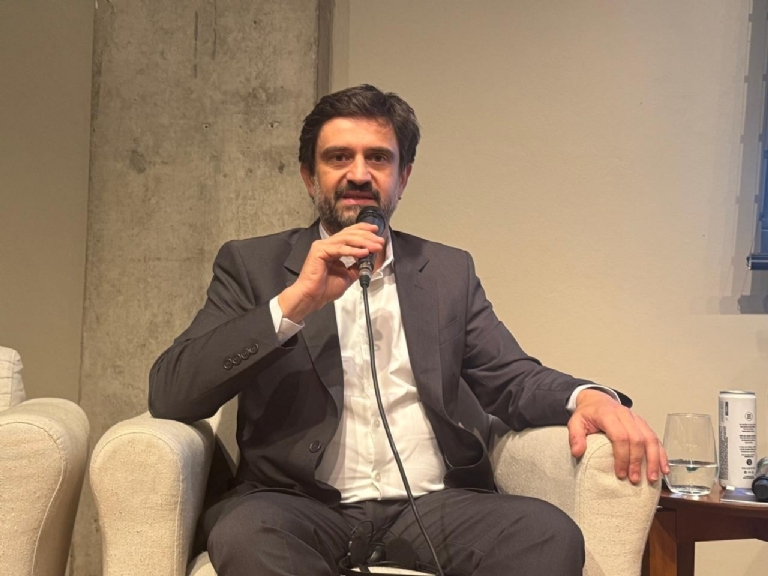
According to him, fighting match-fixing is a public policy and will be implemented by the Ministry of Sports. “Sports integrity will be protected thanks to the actions we are taking. Addressing the allegations requires partnerships, both in education and in repressive measures, for the good of sport.”
Ana Carolina Luna Maçães, compliance manager at Esportes Gaming Brasil, highlighted the importance of complying with all the rules established by the SPA. “Compliance plays a role in safeguarding sports integrity and is the invisible referee of the sector,” she stressed.
According to her, “the transition to a regulated market forced operators to adopt consistent governance practices, but we don’t do this merely in response to regulatory obligations—it is also another action that gives credibility to us as operators and to the industry as a whole.”
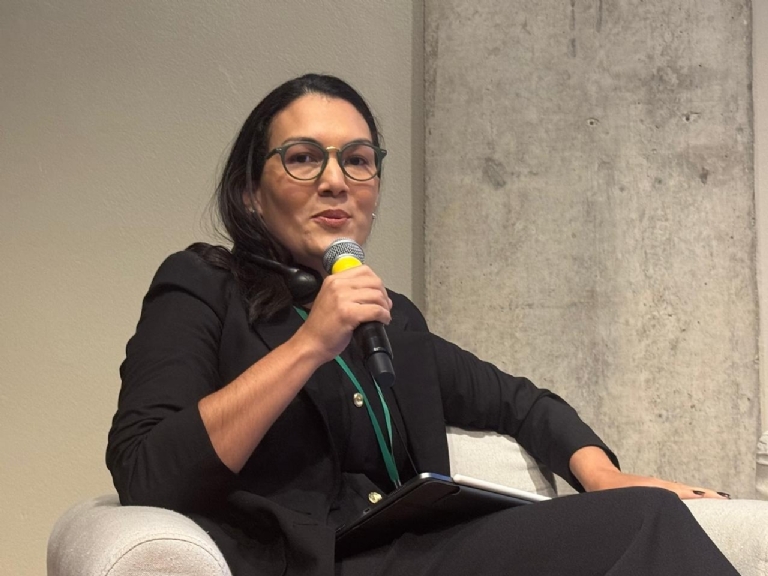
The executive highlighted the partnership signed between the Group—which owns the brands Esportes da Sorte, Onabet, and LOTTU—and Sportradar, not only for educating athletes on sponsored teams but also to monitor all betting activity on the platforms through the MTS system and a new tool called Integrity Change. “With this, we look for all suspicious patterns and contribute to sports integrity.”
Alexandre Fonseca, CEO of Superbet, emphasized the regulatory environment as a means to increase the channeling of players to the legal market, pointing out that regulation should fulfill this duty rather than restrict it.
“Every action taken against the regulated market fuels the illegal one. Every restriction imposed, whether on advertising, sponsorship, taxation, or even stricter KYC, contributes to the growth of the illegal market. Depending on its scale, that growth threatens the very existence of the legal sector,” he stated.
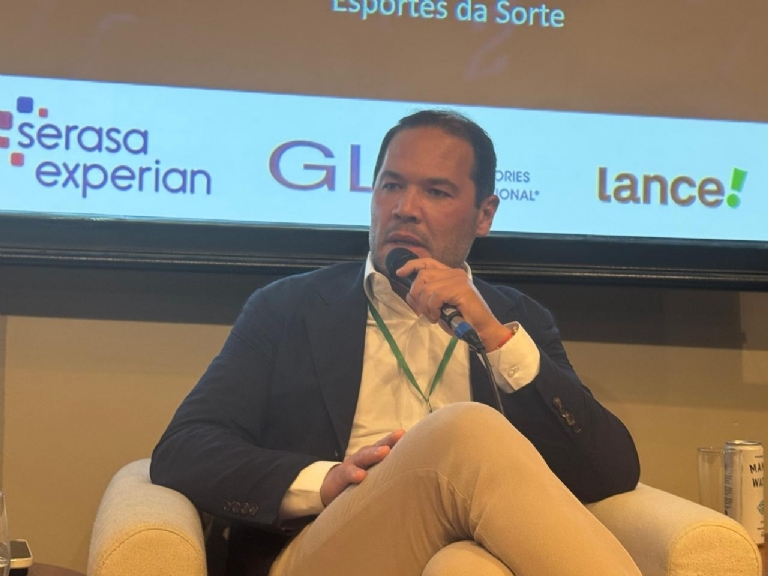
According to him, the more balanced the regulation, the more the sector will contribute to maintaining a competitive market and a vibrant industry. “Today, our sector is a fundamental pillar for the financial sustainability of Brazilian football,” he reinforced.
For the Superbet executive, the regulatory framework must be balanced and healthy, not only in regulating operators but also all providers that make up the ecosystem.
“Sports integrity encompasses all these aspects, and combating illegality is essential to ensuring that sport remains healthy,” he concluded.
Attorney Luiz Felipe Maia pointed out: “Actions to block sites and target payment methods, as well as restrictions on advertising, attack the supply side, but much of the problem lies in demand. Bettors need to understand that it is not worth going to illegal sites.”

“We need to change society’s perception of our industry so it does not reflect negatively in the National Congress. We are under threat of a highly significant tax increase. This will produce a worse product, lowering odds and making it harder to compete with unregulated sites that do not pay taxes,” he emphasized.
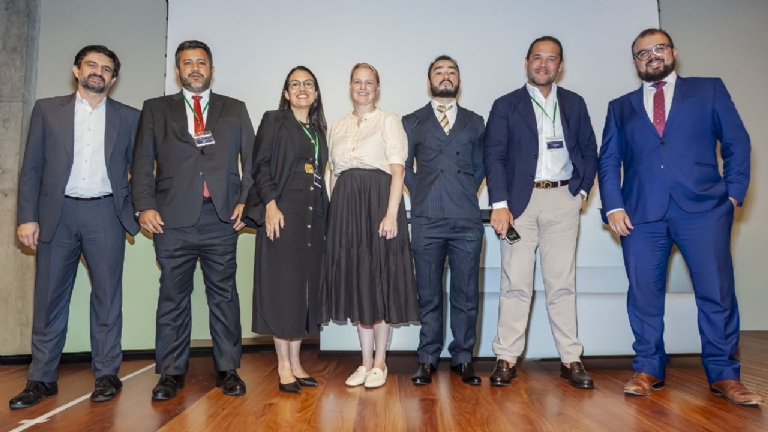
For him, restrictions on advertising for licensed operators also create room for the growth of unregulated sites, and everything must be calibrated in a way that contributes to the sector’s development, rather than encouraging the illegal market.
Source: GMB